1.4 High Reliability using the Multi-master Replication
With the multi-master replication feature provided by Fujitsu Enterprise Postgres, you can build a replication configuration that allows independent data update processing on multiple nodes. In this multi-master configuration, all nodes function as masters, allowing clients to write (update, insert, delete) data to any node, and those changes are automatically synchronized to all other nodes. By utilizing this multi-master replication feature, you can enhance business continuity in disaster recovery.
Enhancing business continuity in disaster recovery
In traditional single-master configurations, standby nodes are prepared in case of unforeseen circumstances, and if the master node stops due to a disaster, a failover process is required to promote the standby node to a new master. In this case, there are costs associated with preparing standby nodes, and there is a certain amount of time and risk of data loss involved in the failover process.
In a multi-master configuration, all nodes feature as independent masters, so even if one node stops, the remaining nodes can continue the service. For example, by building a multi-master replication configuration between geographically separated data centers, if one data center completely stops functioning due to a disaster such as an earthquake or a large-scale power outage, the other data center can quickly take over all processing. This minimizes system downtime and ensures business continuity while reducing the risk of data loss due to data transfer.
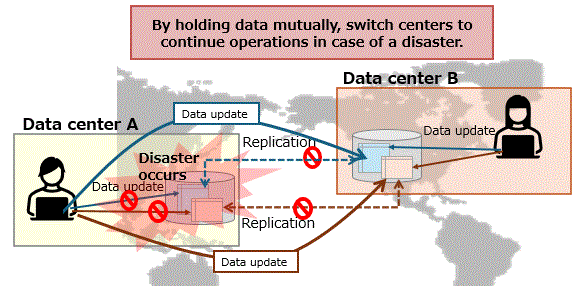
See
Refer to the Cluster Operation Guide (Multi-master Replication) for information on the multi-master replication.